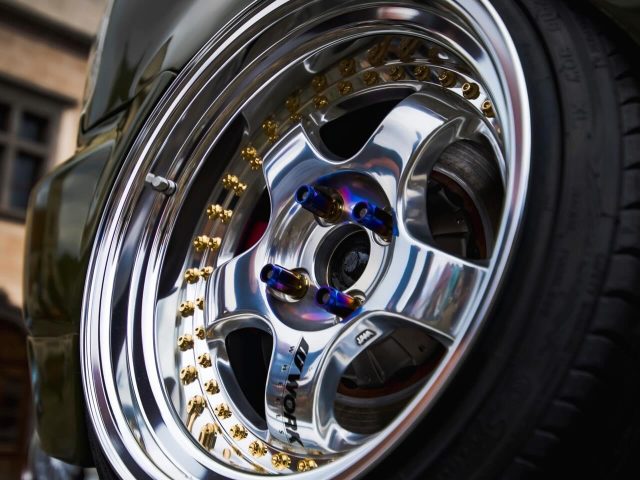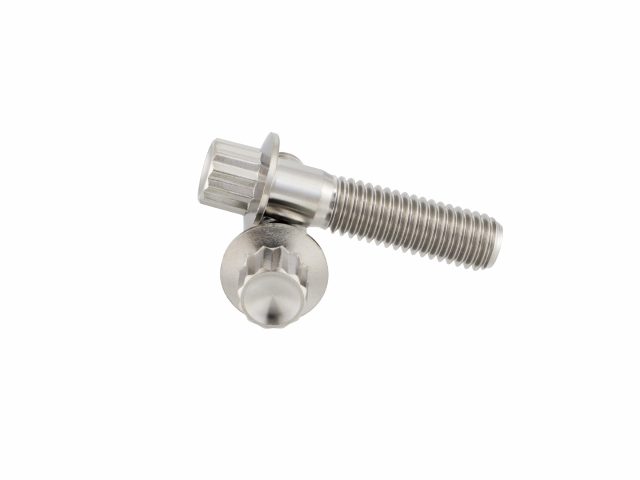
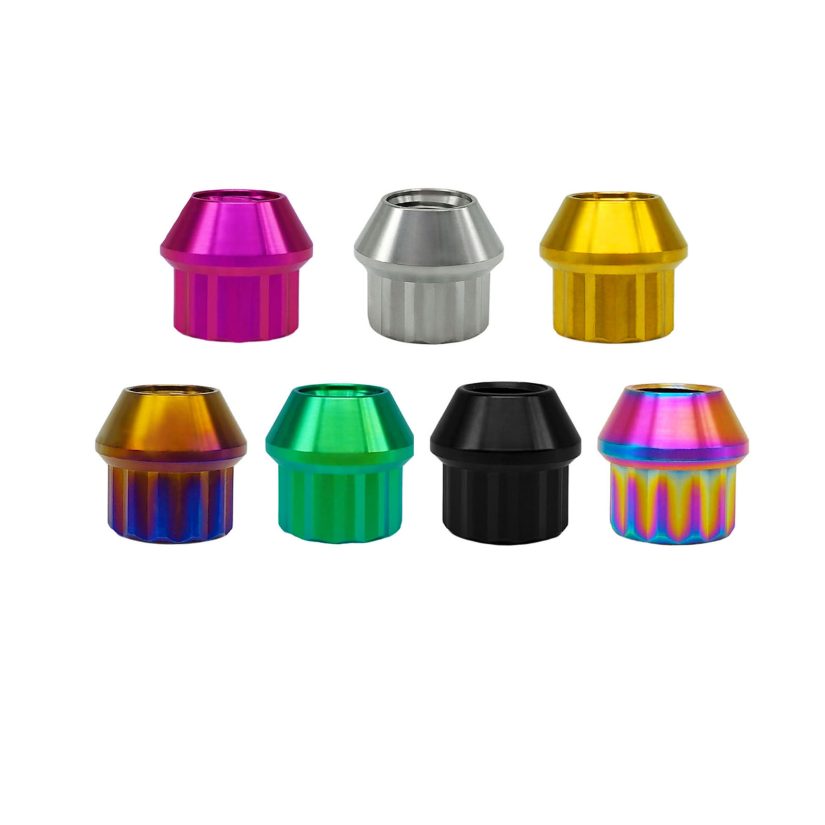
The 12-point head is small, but it does a big job. It lets a wheel nut fit into the narrow pockets between the spokes of modern alloy wheels, where a bulkier six-sided head won't reach. Made in titanium, it also takes weight off the hub and puts an end to corroded nuts that refuse to budge. These titanium lug nuts are made for drivers who care about both.
Why ti lug nuts are worth the upgrade
Weight at the wheel counts more than weight anywhere else on the car. It's both unsprung and rotating, so every gram saved helps the suspension follow the road and lets the wheel accelerate and stop more easily. A full set of ti lug nuts noticeably cuts that weight compared with steel.
Corrosion is the other reason. Steel wheel nuts rust onto the studs, especially in winter, and then need a breaker bar or worse at the next tyre change. Titanium wheel nuts don't rust. Their surface carries a natural film that heals itself if it's scratched. Fitted correctly, they come off as easily in five years as they did on day one.
Getting the fit right
Titanium wheel lug nuts have to match both your studs and your wheels. Four details decide whether they fit:
- Thread size and pitch. Common sizes include M12 x 1.5, M12 x 1.25 and M14 x 1.5, but check your car.
- Seat type. A 60° conical seat is the most common, followed by ball (radius) and flat seats. The seat must match the wheel exactly.
- Open or closed end. Open-ended nuts let longer studs pass through. Closed ends protect the thread from dirt.
- Socket size. The 12-point head needs a matching socket, usually supplied as a key.
If you're not sure, your wheel maker's specification is the best reference. A clear picture of an existing nut also helps us confirm the size.
Spoke clearance matters
Large brake kits and slim-spoke wheels leave very little room around each nut. A standard socket may not fit, or it may scratch the wheel on the way in. The slim 12-point head solves that, because it needs a much smaller tool than a six-sided nut of the same thread. Before ordering, check the diameter of the holes in your wheel and compare it with the outer diameter of the nut and its key. If space is very tight, tell us and we'll suggest a slimmer version.
Locking wheel nuts
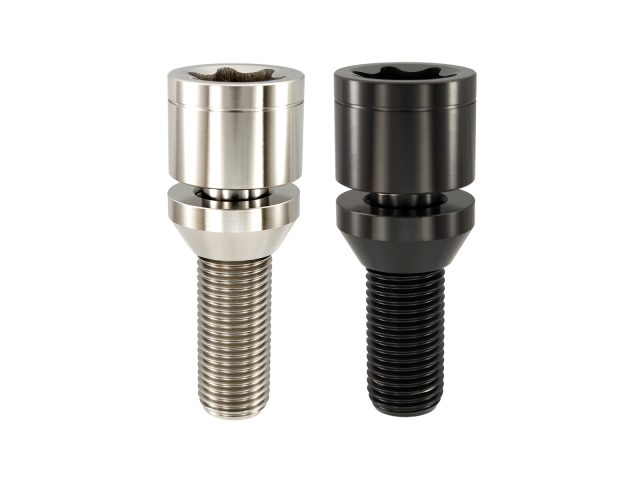
Expensive wheels attract thieves, and lighter wheels are often the expensive ones. A locking version of the 12-point nut replaces one standard nut per wheel. It can only be turned with a matching key that carries a unique pattern. The rest of the set stays standard, so wheel changes stay quick, while the locking nut keeps the wheels on the car. Keep the key somewhere safe and separate from the car's spare.
Colour and finish
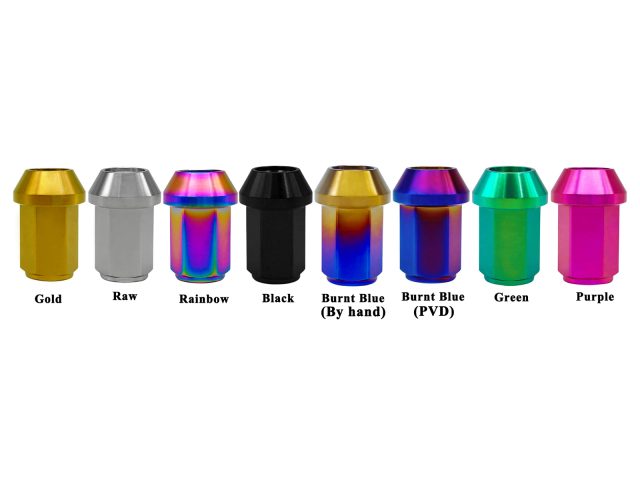
Titanium wheel lugs take anodised colours very well. Shades run from bright blue to bronze, and the shade won't chip under a socket because it's grown into the surface. Natural and polished finishes are available if you prefer a subtle look.
How to buy titanium lug nuts
Choose your thread, seat, end style and colour, then send them to us with the quantity. A full car usually needs 16 or 20, plus a few spares. We'll confirm the fit and send back an offer. Ordering titanium lug nuts online doesn't require an account, and every set is inspected before it's packed.
You can buy titanium lug nuts for one car or in bulk for a workshop. If you'd like to buy titanium wheel lugs to match a particular wheel finish, mention the colour in your message. Titanium wheel lugs online and titanium wheel nuts online orders are produced to your specification, so each nut matches your studs exactly.
Fitting tips
Clean the stud threads before fitting. Tighten in a star pattern to the torque your car's maker specifies, using a torque wrench rather than an impact gun for the final pass. Check the torque again after the first 50 to 100 km, once the wheel has settled on the hub.