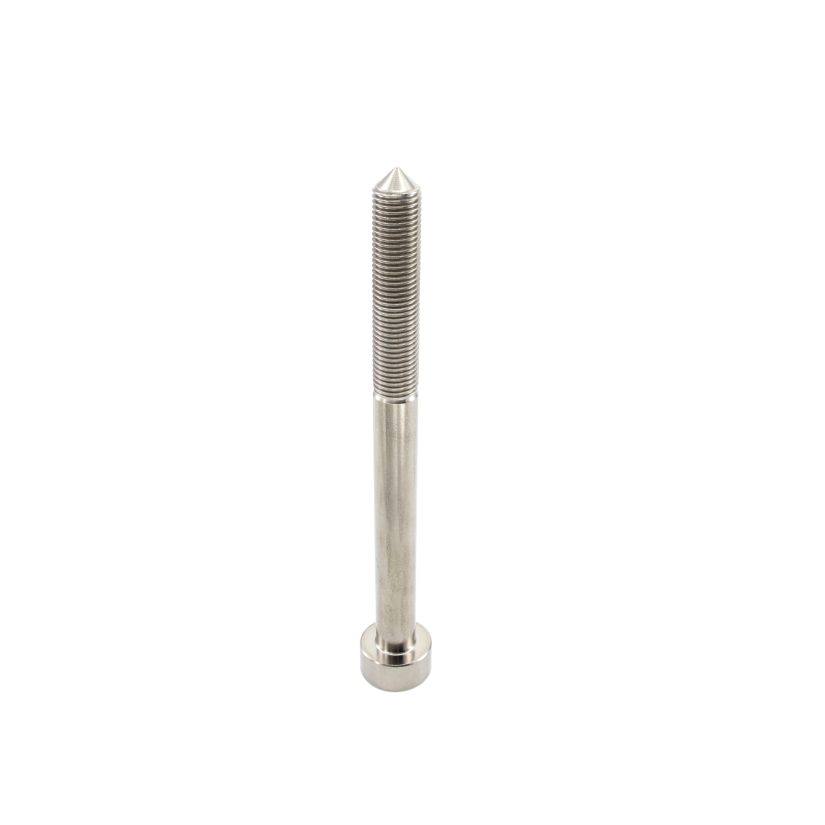
Racing turns ordinary hardware into consumables. A road car might have its wheels off twice a year. A race car can have them off a dozen times in a single weekend, in a hurry, with an air gun, in front of a stopwatch. The nuts and bolts race car engineers specify have to survive that treatment while weighing as little as possible. This page follows a typical race weekend, from first practice to the final checks, and explains how our titanium racing hardware is built for each stage.
Friday: why titanium earns its place
The first session is where the setup is dialled in, and every change means wheels coming off. This is where race spec bolts show their value. A titanium racing bolt weighs a fraction of its steel equivalent. Because wheel hardware sits right at the hub, that saving is unsprung and rotating weight. It's the kind that sharpens turn-in and braking and helps the suspension react over kerbs.
Titanium also shrugs off the conditions. Brake heat, rain and track grime don't cause rust. The thread you fit on Friday looks the same on Sunday.
Saturday: the wheel change test
Qualifying usually means fresh tyres, and in endurance racing pit stops are timed to the tenth. Racing lug bolts and racing lug nuts have to thread on cleanly every time, take full torque from an impact gun and come off again without galling.
Three details decide how well a fastener copes with that routine:
- Thread quality. Clean, precisely cut threads start easily and don't cross-thread under pressure.
- Seat accuracy. The conical, ball or flat seat has to match the wheel exactly, so the wheel centres and the clamping force spreads evenly.
- Head design. The gun socket needs a drive it can grip firmly, with no rounding after dozens of cycles.
Race car lug nuts and racing wheel bolts from our plant are checked on all three before they're packed.
Choosing the best lug nuts for racing
There's no single answer, because the best lug nuts for racing depend on the car. Most race cars running wheel studs use racing wheel nuts, because studs protect the hub thread and speed up wheel changes. Cars built around hub-threaded bolts use racing wheel bolts instead.
When you compare options, look past the price and the colour. Check the material grade, whether the seat matches your wheels and whether the pitch suits your hubs. Find out, too, whether the supplier can certify the alloy. Racing wheel lug nuts that aren't made from the grade they claim to be are a real risk at speed. Every set we ship carries a certificate for the alloy.
Sprint or endurance?
The demands change with the format. In a short sprint race, wheels may not come off at all between start and finish. Weight and looks matter most. In endurance racing, the same nuts may go on and off ten or twenty times in one event, often hot from the brakes. Here, thread durability and a head that tolerates repeated gun use matter more than the last gram.
We can tune the specification to the format. That might mean a longer thread engagement for frequent changes or a lighter head for sprint use.
Why not aluminium?
Aluminium wheel nuts are popular in some series because they're very light. They come with a catch, though. Aluminium threads wear quickly under repeated gun torque, and the seats can deform if the nut is over-tightened even once. Many teams treat aluminium hardware as single-event parts for that reason.
Titanium sits between the two extremes. It's far lighter than steel and much tougher than aluminium, so a set lasts many events rather than one. For teams that change wheels often, that durability usually outweighs the few grams aluminium would save.
Colour coding in the pit lane
Speed in the pits depends on the crew never having to think. Anodised colours help with that. Some teams give each corner of the car its own colour, so nuts from the front left never end up on the rear right. Others colour-code by length or seat type when they run several wheel designs in one season. Because the colour is formed in the titanium itself, it stays readable after dozens of gun cycles.
Sunday: the bolt race teams trust under load
Race day puts everything together: long stints, heavy braking and the chance of contact. This is where the choice of a racing nut or bolt pays off. A fastener that holds its torque through heat cycles keeps the wheel properly clamped from the first lap to the last.
Titanium helps because it stays stable in the heat around brakes and hubs. Fitted at the correct torque and checked between sessions, titanium racing nuts and bolts give consistent clamping without the corrosion problems of steel.
Monday: inspection and replacement
Even the best racing hardware needs looking after. After a hard weekend, it's worth a careful check:
- Look at the threads for damage, galling or debris.
- Inspect the seats for wear or marks that suggest uneven clamping.
- Check the heads for rounding from the impact gun.
- Replace anything doubtful. Wheel fasteners are cheap compared with what they hold.
Many teams replace their full set of wheel fasteners at fixed intervals, whatever their condition. If you're planning a season, tell us how many cars and events you run. We'll schedule batches to match.
Ordering racing hardware
Send the spec sheet for your car: thread, seat, length, head size and the number of sets. We'll price it per set and propose a delivery plan for the season if you need one.
Need a colour to match a team livery, or one colour per corner so the crew never mixes them up? Anodised finishes are available in the full range. All of our race spec bolts and nuts are produced for each order, cut to suit your car instead of the closest catalogue size.