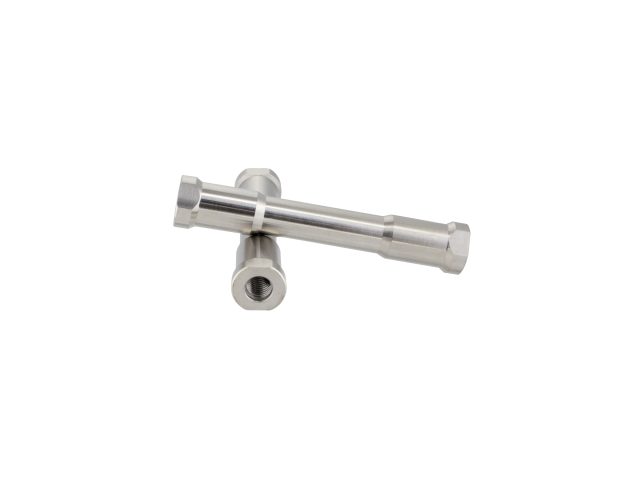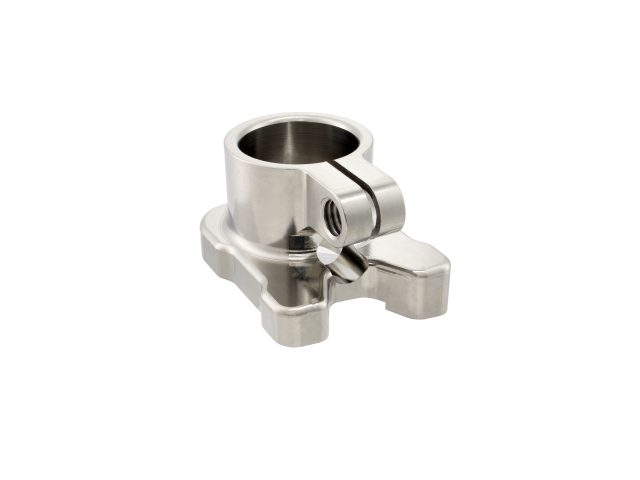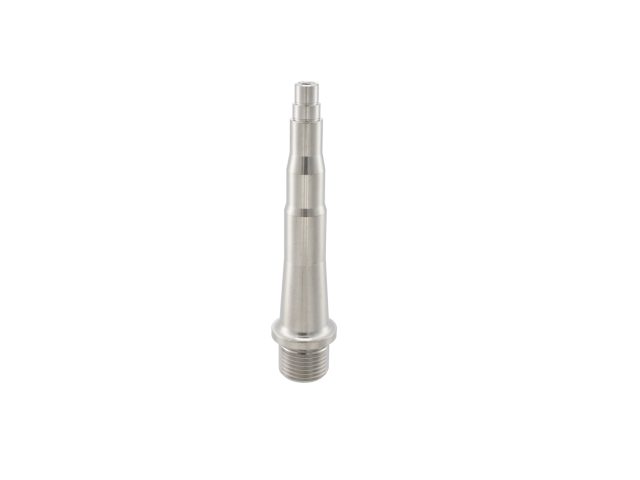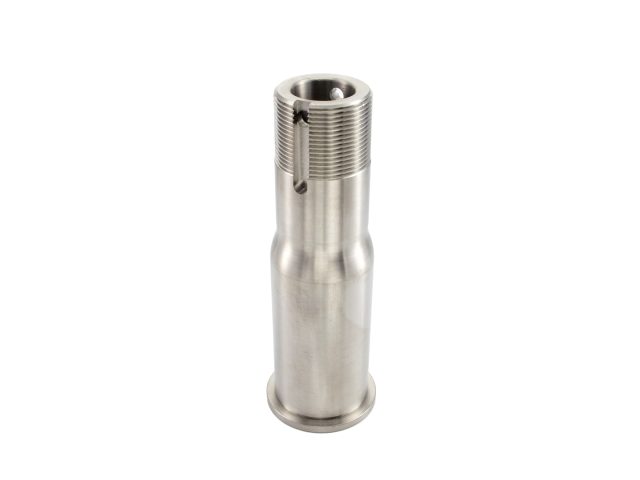
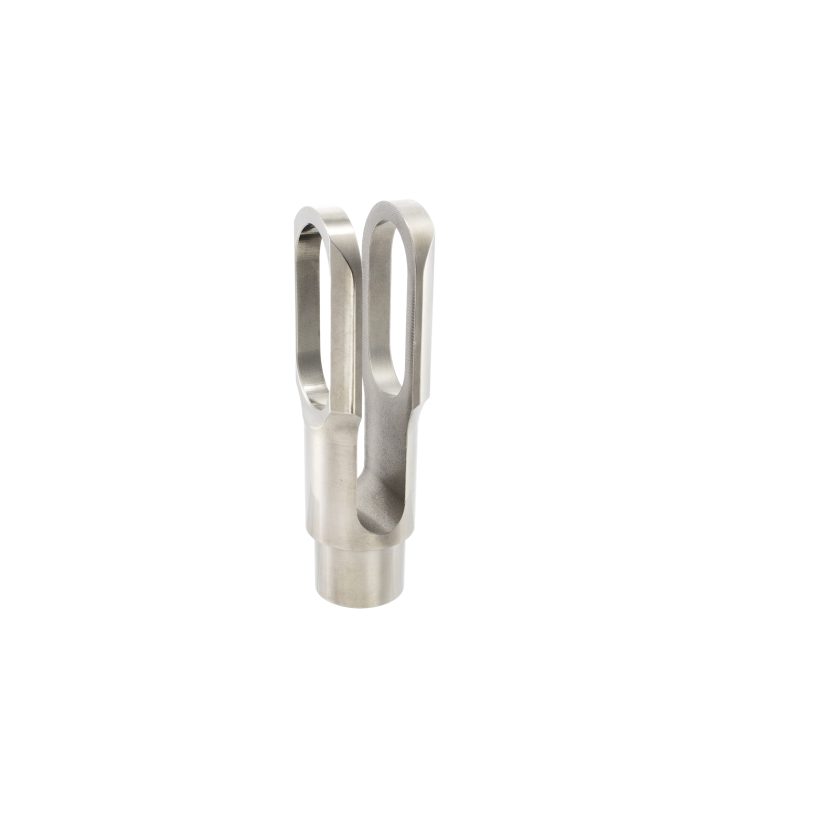
Every custom part starts the same way: someone has a problem that no catalogue can solve. A bracket that has to weigh half as much. A housing that has to survive seawater for twenty years. A fitting that simply doesn't exist yet. This page follows one typical project from the first email to the finished batch. Along the way, it shows how our custom titanium machining works and what you can expect at each stage.
It starts with a drawing, or sometimes just an idea
Most enquiries arrive with a CAD file or a PDF drawing. Some arrive with a sketch on squared paper, a photo of a worn steel part, or a description of what the part has to do. All of these are workable starting points. What matters is that we understand the job: what the part connects to, what loads it carries, and what environment it lives in.
From there, our engineers review the design for manufacturing. They check tolerances, wall thicknesses, thread forms and surface requirements. They'll also flag anything that would push up cost without improving the part. A radius that's tighter than it needs to be, or a tolerance that's stricter than the fit requires, can often be relaxed. Small changes like these can make custom parts manufacturing noticeably cheaper without affecting how the part performs.
Choosing the right route to make it
Not every part should be made the same way. For many shapes, custom machining from solid bar is the most direct route. Our 30-plus CNC machines handle turning, milling and drilling. They work to the tolerances your drawing specifies, and each part is measured against that drawing before it moves on.
Some geometry is better suited to other methods. Complex shapes with internal channels or hollow sections can be produced by investment casting or by 3D printing in titanium. They're then finished on the CNC line wherever critical faces need to be precise. Combining processes this way keeps the cost sensible while hitting the accuracy that matters.
Material choice happens at this stage too. We process 39 grades of titanium, from commercially pure metal for corrosion-critical jobs to medical-grade alloy for implant components. If you haven't specified a grade, we'll recommend one based on the loads and environment you've described.
Prototype first, then production
For a new design, we usually suggest a short prototype run. It gives you real parts to test, fit and measure before committing to volume. If something needs to change after testing, the adjustment is made on the drawing and carried into production. That's far cheaper than discovering it later.
Once the prototype is approved, production follows the same programme and the same inspection plan. Every batch leaves with a certificate tracing it to the bar it was cut from. Repeat orders can then be placed simply by referring to the previous job.
What drives the cost of a custom part?
Three things decide most of the price: the amount of material, the machining time and the quantity. A part cut from a large block, with most of the metal removed, costs more than one made close to its final shape. Tight tolerances and fine surface finishes add time on the machine, so we only apply them where the drawing really needs them.
Quantity spreads the setup cost. Programming a machine and making fixtures takes the same effort for ten parts as for a thousand. That's why the first prototype run always costs more per piece than production. If you can share a likely annual volume, we'll quote both and show you where the price breaks fall.
Fasteners are custom work too
Not every custom job is a complex component. Often it's a bolt that doesn't exist in any standard. It might have a non-standard length, an unusual head, a special thread or a shank with a groove for a retaining clip. Custom titanium bolts like these are a large part of our daily work. They follow the same route as any other part: drawing review, machining, inspection and certification.
The same applies to custom titanium fasteners of every other kind. That includes special nuts, spacers, washers and inserts. If you've been modifying standard parts by hand to make them fit, it's usually more reliable to have them made correctly from the start.
Who this service is for
Our custom titanium parts are used by companies in aviation, shipbuilding, healthcare and chemical processing. They also go to smaller workshops and product designers who need a few dozen pieces to get a project off the ground. Custom titanium fabrication isn't only for large programmes. A single prototype and a recurring batch are both quoted on the same transparent terms.
Start your project
Send us your drawing, sketch or a short note on what the part must do, together with the quantity you're thinking about. Our engineering team will review it and come back with questions, suggestions and a quote.