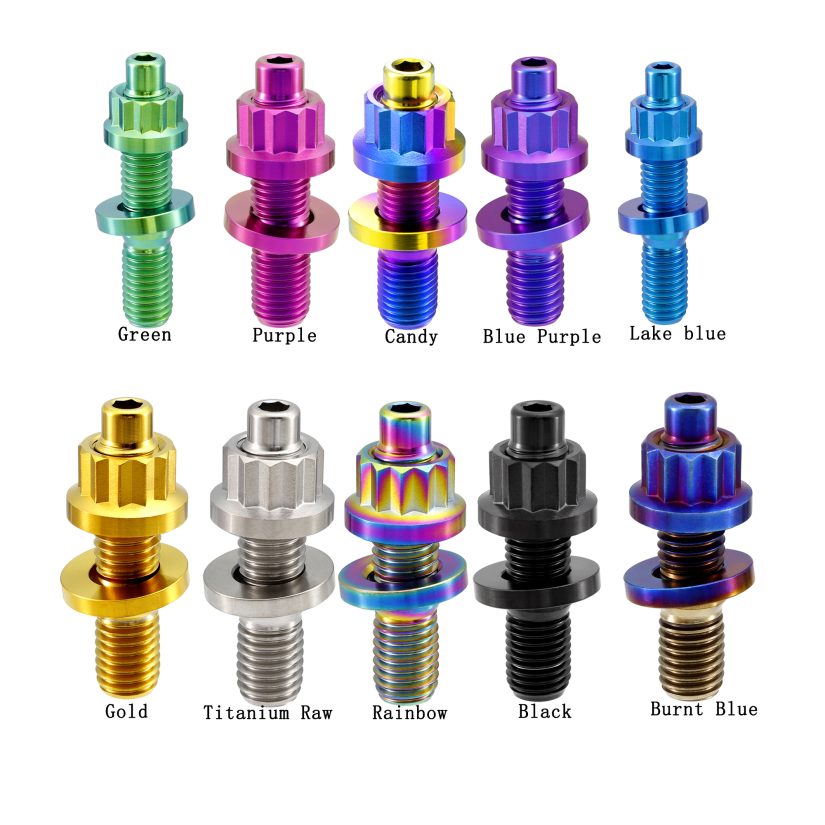
Ask any mechanic which fasteners they dread removing, and the exhaust will top the list. Heat cycles of hundreds of degrees, followed by cold rain, weld steel hardware to the manifold. Broken studs and drilled-out threads follow. Titanium exhaust bolts and studs are made to stop that cycle before it starts.
Studs or bolts on the exhaust?
Most manifolds are held on by studs, not bolts. Titanium manifold studs screw permanently into the cylinder head, and nuts clamp the manifold in place. The threads in the head are therefore used only once. Every later service happens on the stud and nut, which are cheap and easy to replace.
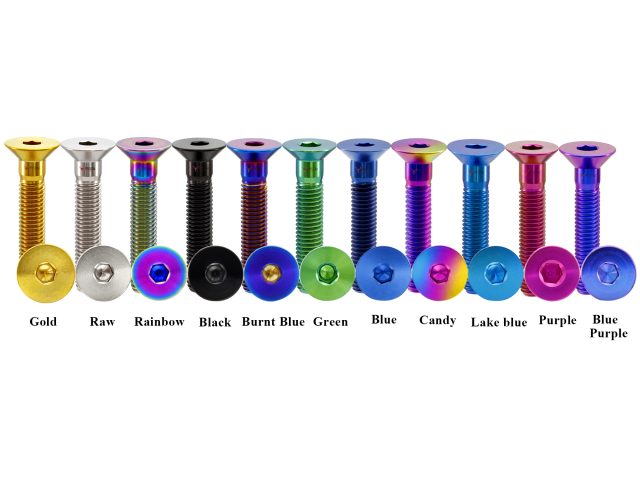
Titanium exhaust bolts are used further down the system: on flanges, collector joints, silencer mounts and brackets. Both do the same job of holding the system together through extreme temperature swings.
Why titanium handles the heat
Titanium keeps its strength at temperatures that weaken aluminium and many other light alloys. It also expands less than steel or aluminium as it warms up. That puts less stress on the joint with every cycle. Most importantly, it doesn't rust. The scaling and corrosion that lock steel exhaust hardware in place simply don't form.
Here's what that means for you on the workbench:
- Clean removal. Studs and nuts come off at the next service instead of snapping.
- Fewer leaks. The clamping force holds better through repeated heat cycles.
- Less weight. Every part is lighter than the steel one it replaces.
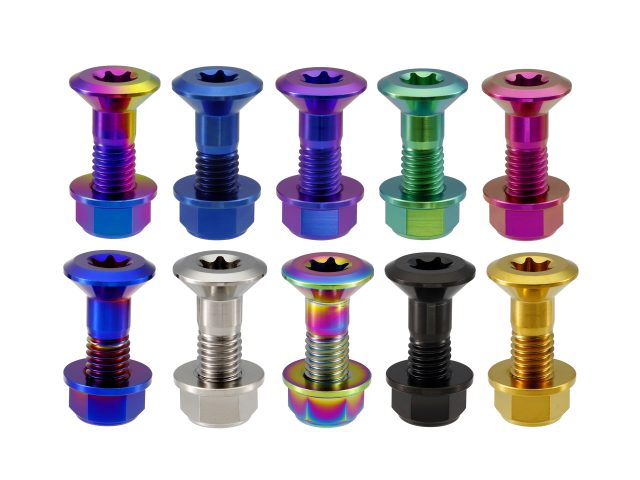
- A finish that lasts. The burnt-blue look many owners like stays put, because it's formed in the metal itself.
Which engines benefit most
Turbocharged engines are the obvious candidates, because the manifold and turbine flange run hotter than on a naturally aspirated engine. Motorcycle headers are another, since they sit in the airflow and get soaked by rain. Race engines that are stripped often benefit too. Each time the exhaust comes off, steel studs risk snapping. Titanium ones simply unscrew.
Choosing nuts for the studs
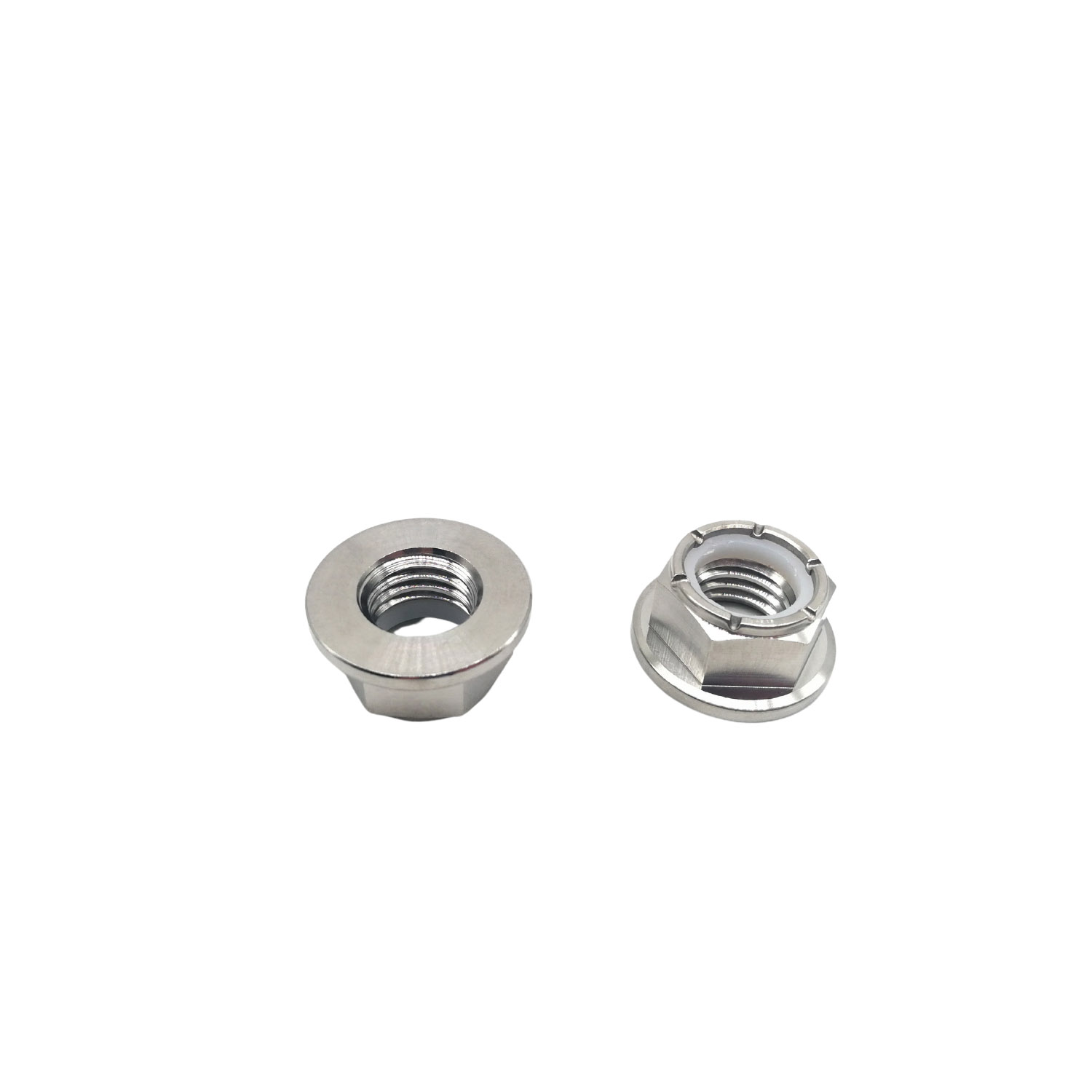
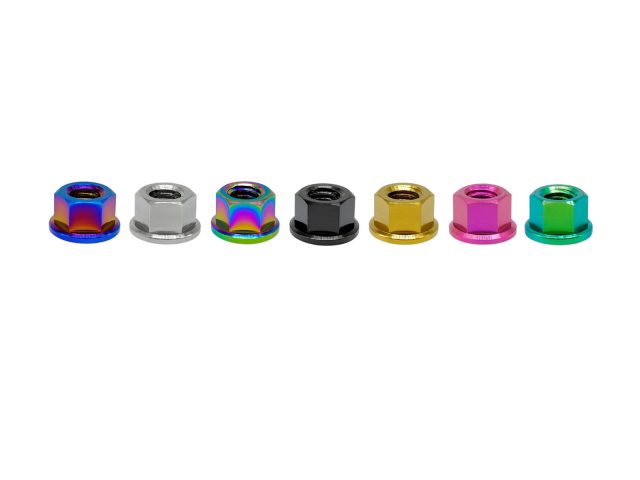
A stud is only half the joint. Nylon-insert designs melt at exhaust temperatures, so pair titanium studs with an all-metal locking style or a flanged nut made from the same metal. Keeping both halves in titanium avoids mixing metals that expand at different rates. That's one more reason the joint stays tight through hundreds of heat cycles.
Fitting tips
Coat every thread with a high-temperature anti-seize before assembly. Exhaust joints run hot enough to make galling more likely than anywhere else on the engine. Tighten the nuts evenly, working across the flange, to the figure your engine maker gives. Check them again after the first few heat cycles, once the gasket has settled.
Ordering titanium exhaust studs
Measure the thread at both ends, the overall length and the nut type, then email them with the quantity you need. An original stud with a tape measure laid next to it works as a reference too. We'll turn titanium exhaust studs to those measurements, inspect each lot and include a certificate for the grade.